Alarm systems in St Clair
Give regular users individual codes or app access where supported and demonstrate a typical late arrival.
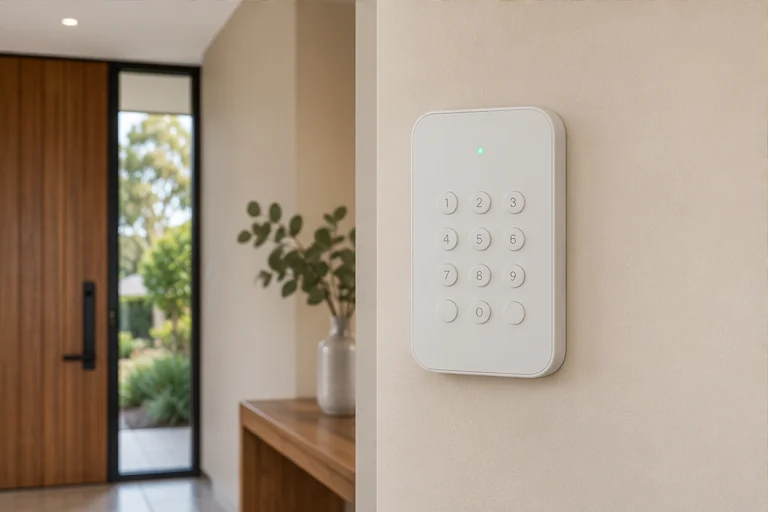
Planning alarms in St Clair
Design for the arrival people actually use
Picture a household member arriving while others are asleep at a family home with users who keep different hours. Use the household schedule to decide between an overnight perimeter routine and full arming when away. List separate users and explain which controls each needs. Trace the walk from that opening to the control point. Mark the first sensor the person must pass and decide which openings should permit an entry delay. Think through the same route carrying bags, working alone or going back outside for something forgotten. A system is easier to use when the keypad gives a clear answer about what is armed and which opening, if any, needs attention.
Give overnight and away arming different jobs
Use a late return through a different door from the one used during the day as a planning exercise. Identify the doors or windows that should stay protected and the areas where somebody might legitimately move. On systems that support partial arming or separate areas, specify what a user can arm independently and which routes remain available. Make the proposed zone names match the words people use on site. During a walkthrough, open an agreed point and check whether the panel identifies it clearly enough for someone unfamiliar with the installation to find it.
Choose sensors after looking at doors and rooms
Start around the entrance used for a predictable late arrival and consider the opening, surrounding materials and ordinary activity. A door contact reports an opening, while a movement detector has a different role inside a room. For an upgrade, check the panel model and ask which existing sensors and cable runs can be tested for reuse. Wireless units can suit locations where adding cable is difficult, subject to signal and future battery maintenance. If the property includes pets, machinery or separately used buildings, tell the installer which areas are active and under what conditions before positions are set.
Make the first week easy to manage
If a household member arriving while others are asleep is the first person to test the system each evening, give them a short guide to the correct mode and who to contact if they need help. Repeat the test when the whole household is home. Explain regular service items, including any panel backup battery and device batteries relevant to the chosen equipment.
Decide what happens after an alarm
For St Clair, make a list of people who should receive notifications from the proposed system. Discuss who checks an event if the first contact is away, whether you need notifications for faults as well as intrusion events, and what the panel does when the usual communications path is unavailable. An app notification and back-to-base monitoring are different arrangements. If you want monitoring, ask which events the service receives and what response you are arranging. Write down who can change contacts and who gets told when something about the site changes.
Run a normal arming cycle at handover
Have a household member arriving while others are asleep demonstrate arrival and departure using the regular door. Ask the installer to show the normal disarming sequence, how an open point appears, and how to recover if someone inadvertently starts the wrong routine. Have each regular user disarm with their own code or app access and verify the intended overnight setting separately. If you are keeping an existing siren or sensors, include a functional check of the retained components. Request a short zone list and a way to find the user instructions later. Where the panel supports named users, check that you know how to replace a test code without affecting everyone else's access.
Bring a short brief to the assessment
Sketch the main openings and explain a late return through a different door from the one used during the day in your own words. Bring the old equipment model if there is one and mention any changes in ownership, staff, layout or planned renovations. Ask which areas can be operated separately, what has to be replaced, who will receive alerts and what the handover covers. If your preferred arming sequence involves multiple users, ask to hear it explained from the perspective of the person who arrives first and the person who leaves last.
Installation overview
Other security services in St Clair
Alarms in other suburbs
Talk to us about alarms in St Clair
Tell us which entrances you use, whether you want overnight arming and what alarm equipment is already fitted.